Emergency Sewer Line Repair in Fort Collins, Fast Response When It Backs Up
Waste rising through the lowest drains, every fixture in the home failing at once, a foul smell you cannot ignore. A sewer line problem is one of the most urgent and unhealthy things that can go wrong in a home, and it does not get better on its own. We respond fast, use a camera to find the true cause, and repair the line. When a line is too far gone to save, we replace it and get your home working again.
Why a Sewer Backup Cannot Wait
A blocked or broken sewer line is not like a single slow drain. It affects the whole home and brings a real health risk, which is why it needs a fast response.
Stop All Water — Call Immediately
- Raw sewage coming up through tubs, showers, or floor drains
- Every drain in the home backing up at the same time
- Sewage smell inside living areas of the home
- Standing wastewater on flooring or in the basement
Why It Cannot Wait
- Raw sewage carries bacteria and pathogens that make a home unsafe to occupy
- Sewer gas venting into living space is hazardous to breathe
- Wastewater damages flooring and drywall within hours
- Every flush adds more to the backup — stop all water use now
If waste is coming up through a tub, a shower, or a floor drain, stop running water anywhere in the home and call. Every flush and every sink adds to the backup. This is the kind of call we treat as a true emergency.
Sewage backing up right now? We respond immediately, any hour →Is a sewer backup a plumbing emergency?
Yes. Raw sewage backing up into a home is a health hazard and needs an immediate response. It means the main line is blocked or broken, so every drain is affected at once. Stop using all water to avoid adding to the backup, keep people and pets away from the waste, and call for emergency help right away.
Warning Signs of a Sewer Line Problem
A failing sewer line usually gives warning before it backs up fully. Catching these signs early can turn an emergency into a planned repair.
- More than one drain is slow or gurgling at the same time
- A toilet bubbles or the tub backs up when you flush or run the washer
- A sewage smell inside the home or out in the yard
- A soggy, sunken, or unusually green patch of lawn over the sewer path
- Waste appearing first at the lowest drain in the house, often a basement or floor drain
- Drains that clear for a while after cleaning, then back up again
Any one of these points to trouble in the line that carries waste away from the home. The sooner it is inspected, the more options you have and the smaller the repair.
How do I know if my sewer line is broken?
The clearest sign is several drains failing together, since that points to the shared line rather than one fixture. Add a sewage smell, a soggy patch in the yard, or waste rising at the lowest drain, and a broken or blocked sewer line is likely. A camera inspection confirms the exact problem and its location.
Sewer Line Problems We Fix in Fort Collins
Waste lines fail for a handful of reasons, and the right fix depends on which one. Here are the problems we find and repair most.
Main Line Clogs
When every drain in the home backs up together, the blockage sits in the main line. Grease, flushed items, and years of buildup can choke the line. We clear it and camera it to confirm nothing deeper is wrong.
Tree Root Intrusion
Roots seek moisture inside a waste line and work into the smallest crack or joint. Once inside, they spread into a dense mat that snags waste and blocks flow — especially common in older Fort Collins neighborhoods with mature trees.
Cracked and Collapsed Pipe
Age, ground movement, and pressure from above can crack a waste line or collapse a section entirely. A collapse stops flow completely. A camera shows the break so the repair targets the exact spot.
Bellied or Sagging Line
When a section of line settles and sags, it forms a low spot where waste pools instead of flowing through. Correcting a belly means addressing the sunken section, not just clearing the clog it keeps causing.
Corroded Cast Iron and Clay Pipe
Many older homes near the historic core have cast iron or clay waste lines. Cast iron corrodes into a rough, flaking surface while clay joints shift and let roots in — both reach an age where repeated trouble signals the end.
Sewer Pipe Leaks
A cracked waste line can leak sewage into the surrounding soil, showing up as a soft, smelly patch in the yard. These leaks contaminate the ground and draw pests. We locate the leak point and repair or replace the section.
What causes a sewer line to fail?
The main causes are tree roots working into the pipe, blockages from grease and non-breaking-down items, cracks or collapse from age and ground movement, and low spots that pool waste. Older cast iron and clay lines also corrode and shift over time. A camera inspection identifies which cause is behind the trouble so the fix matches the problem.
Precision Diagnosis
Camera Sewer Inspection, We See the Real Problem
Guessing at a buried waste line wastes time and money. We feed a waterproof camera down the line and watch a live view, so we can see exactly what is wrong and precisely where it sits — no guesswork, no wide digs.
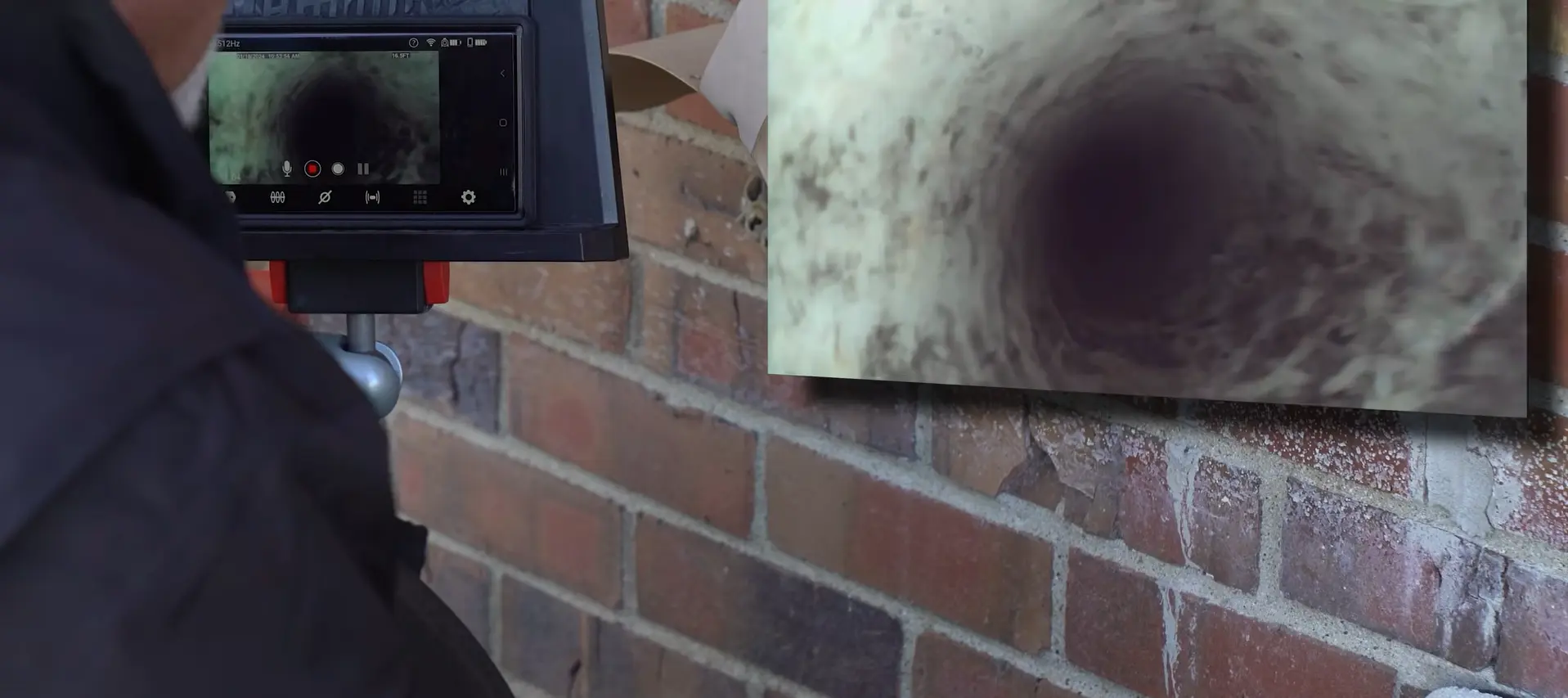
The camera shows whether the trouble is a root mass, a crack, a collapse, or a belly — with the precise location so any repair targets the right spot.
We know how far down the problem sits before a shovel touches the ground. That keeps any dig focused and your yard intact as much as possible.
A camera inspection before closing avoids inheriting a costly sewer problem — the kind of hidden issue no surface walkthrough would catch.
What is a sewer camera inspection?
A technician feeds a waterproof camera on a flexible cable down the sewer line and views a live feed of the inside. It shows the exact problem — a root mass, a crack, a collapse, or a low spot — and its location and depth. This lets the repair target the precise point rather than digging up the whole line to find it.
Repair Options
How We Repair a Sewer Line, With and Without Digging
Not every sewer repair means tearing up your yard. The right method depends on the condition of the line, how much of it is affected, and where the damage sits. We walk you through the options and show you the camera footage before any work starts.
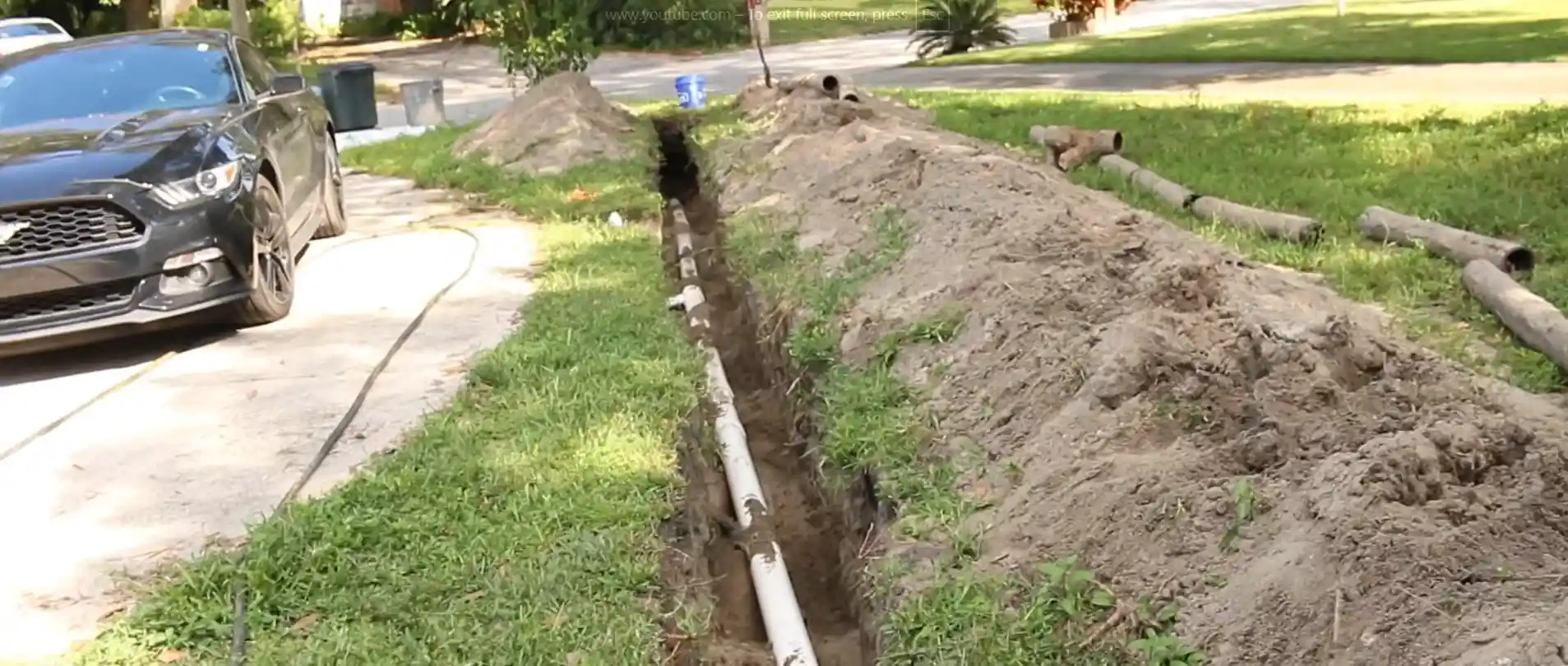
For a cracked or leaking line that still holds its shape, we pull a resin liner through the old pipe and cure it in place — a new pipe within the old one, no long trench required.
When a line is collapsed or too damaged to line, pipe bursting pulls a new pipe through the old path while breaking the old pipe outward — replacing the full run with just two small access points.
When damage is contained, we dig one small access point and replace just that section. When a line has collapsed along most of its length, open excavation may be needed — we keep it as focused as possible.
Can a sewer line be repaired without digging up my yard?
Often, yes. Trenchless methods like pipe lining and pipe bursting repair or replace a line using one or two small access points instead of a long trench. Lining suits a cracked but intact pipe, while bursting replaces a collapsed one. Both spare most of your yard, though heavy damage can still require some open excavation.
When a Sewer Line Needs Full Replacement
Repair handles most problems, but sometimes a line is too far gone to save. Replacing it once costs less than repairing the same failing pipe again and again.
Full replacement usually makes sense when:
- The line has collapsed along much of its length rather than at one point
- Old clay or corroded cast iron is failing in more than one place
- Roots have invaded repeatedly and keep returning after clearing
- The same section has needed repair several times in a short span
- A belly runs long enough that re-sloping the line is the only real fix
When replacement is the answer, trenchless pipe bursting often does the job without a full-length trench, so even a complete replacement can spare much of your yard. If repeated main line clearing through our drain cleaning service has not held, replacement is likely the more cost-effective long-term solution.
How long does a sewer line last?
It depends on the material. Modern PVC lines can last fifty years or more. Older cast iron runs roughly fifty to seventy-five years but corrodes with age, and clay lines last decades but crack and let roots in at the joints. A home built before the 1980s may have a line nearing the end of its service life.
What Causes Sewer Line Problems in Fort Collins
Fort Collins has conditions that put waste lines under real strain. The established neighborhoods around the historic core are lined with mature trees, and those large root systems are constantly searching for water. A sewer line full of moisture is exactly what they seek, so root intrusion is one of the leading causes of line failure in the older parts of the city.
The age of the pipe adds to it. Many homes built decades ago still run their original clay or cast iron sewer laterals — materials that corrode, crack, and shift as the years pass. Northern Colorado's freeze and thaw cycle moves the ground around those buried lines through every winter, stressing old joints until they separate or crack. Between reaching trees, aging pipe, and shifting soil, a sewer problem in an older Fort Collins home is often a matter of when rather than if.
Newer parts of the city are not immune either. Rapid growth means many neighborhoods sit on ground that was graded and filled within the last few decades, and settling soil can throw a slope off just enough to create a belly in an otherwise sound line. When trouble runs deep enough that it looks like a full pipe replacement rather than just a blockage clearing, knowing what material the line is made of tells us a great deal before the camera even goes down.
Who is responsible for the sewer line, me or the city?
As a homeowner, you own and are responsible for the sewer lateral — the line running from your home to the point where it meets the public main, usually at the street. The city maintains the main line itself. Most repairs fall on the property owner because the problem sits in the lateral, on your side of the connection.
How a Fort Collins Sewer Repair Call Works
A clear process gets the line working and keeps the surprises out.
We Respond and Assess
For a backup, we get there fast and stop the immediate problem so waste stops entering the home. Then we look at what is happening across the fixtures.
We Camera the Line
We send a camera down to see the true cause and its exact location, so nothing about the repair is a guess.
We Explain Repair or Replacement
You get a clear picture of the problem and the options — trenchless or dig, repair or replace — with the cost in writing before any work begins.
We Complete the Work and Verify
We carry out the agreed fix, then camera or flow test the line again to confirm waste moves freely all the way out.
Sewer Line Service for Homes and Businesses
A failed sewer line shuts down a household and can close a business entirely. We handle both across the area.
- Residential sewer laterals for single homes, from a quick clearing to a full replacement
- Rental and multi-unit properties where a main line failure affects several tenants at once
- Restaurants and businesses that cannot operate with restrooms or kitchens out of service
Fort Collins Sewer Repair Service Area
Our sewer crews reach every part of Fort Collins. Work runs from the historic core of Old Town and Downtown (80521) across Midtown and Eastside (80524), through West and Southwest Fort Collins (80526), into the southern stretches of Harmony and Fossil Creek (80525), and out to the growing Southeast Fort Collins (80528).
Sewer line failing anywhere in Fort Collins? Call now for a fast response →Fort Collins Sewer Line Repair Questions
Sewer Line Failing in Fort Collins? We Respond Fast.
Our licensed crew cameras the line, explains the options, and carries out the repair — same day when the situation calls for it. Call now for an immediate response, any hour.